Sun in the sky, you know how I feel Breeze driftin' on by, you know how I feel It's a new dawn, it's a new day It's a new life, for me And I'm feeling good Feeling Good, Leslie Bricusse & Anthony Newly (1964)
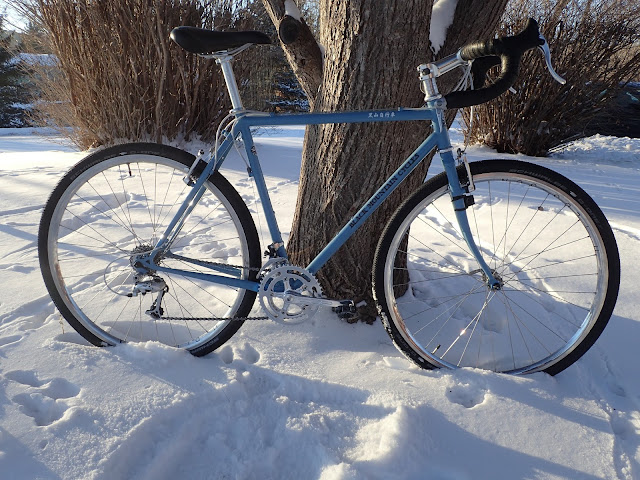
Alchemy Ronin at home on dirt at Green Mountain Open Space Park in Jefferson County, Colorado.
After picking up my new Ronin Titanium gravel bike at Alchemy Bikes last Wednesday, I started pedaling on my first ride at about 11:00 am and didn't stop until almost 6:30 pm. Wow. What a ride.
I flew along the Cherry Creek, South Platte and Bear Creek Trail bike paths to eventually reach the single track at Bear Creek Lake Park near Morrison. Those bike path miles were fun and fast, but the Ronin really came alive on the skinny dirt roads that park calls trails. Spot on fit, precise handling, silky smooth ride. Awesome sauce.
The next day I rode another two hours up and around Green Mountain Open Space Park in Jefferson County. Those skinny dirt roads were generally rougher, rockier, and steeper than Bear Creek Lake, but certainly nothing that the Ronin didn't handle with ease.
This is going to be fun. I can't wait to get it out on Black Hills forest dirt and Badlands gravel.
I will post more details and impressions as I ride this beauty, but for now, here are a few pictures and the specifications.
Working in my bike during Alchemy's company move, Bryce adjusts my saddle precisely to design.
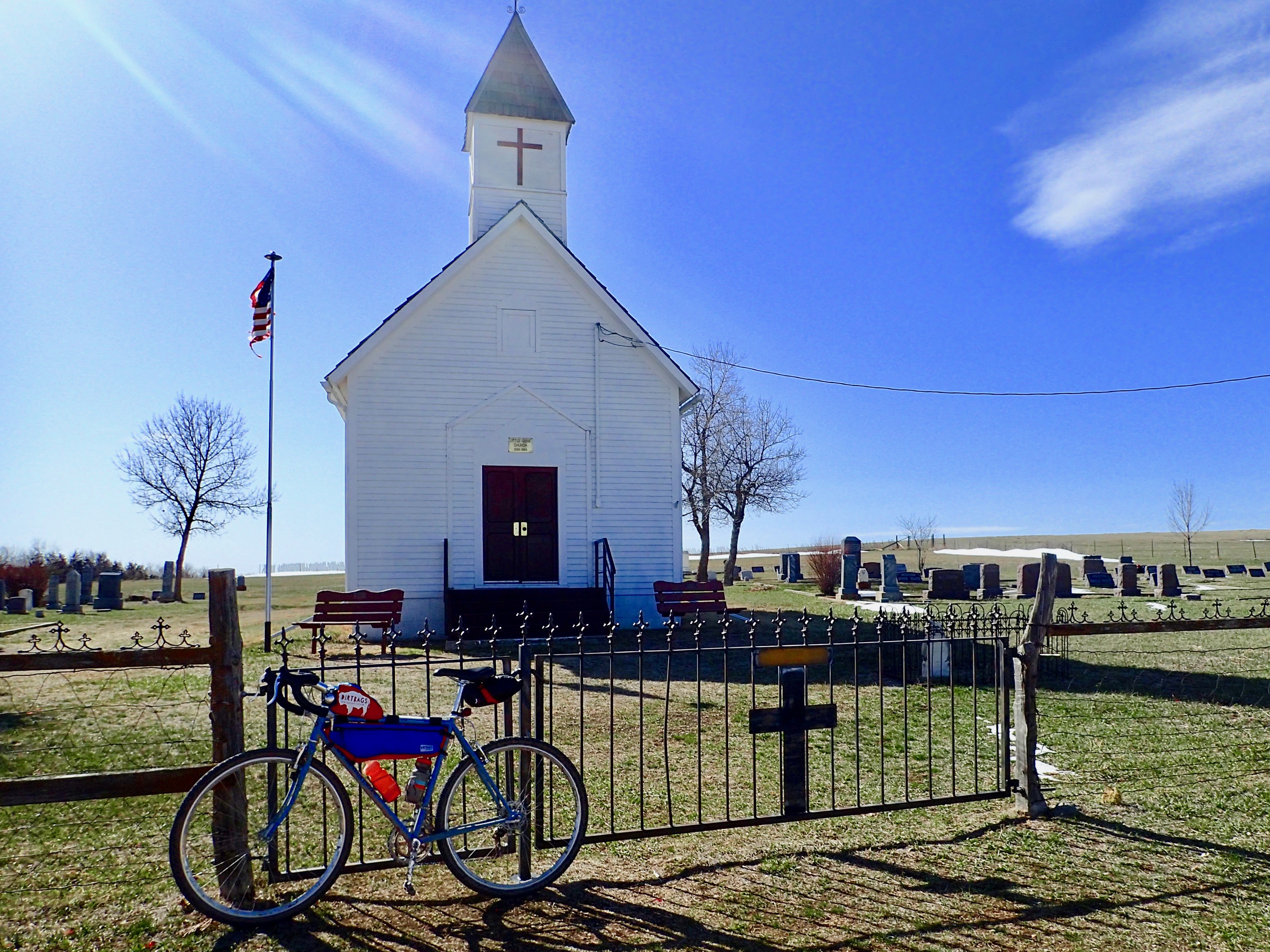
On my first ride, I reach dirt at Bear Creek Lake Park after a 20+ mile bike path shake down.
Alchemy Ronin rocks Green Mountain Open Space Park on my second day's ride.
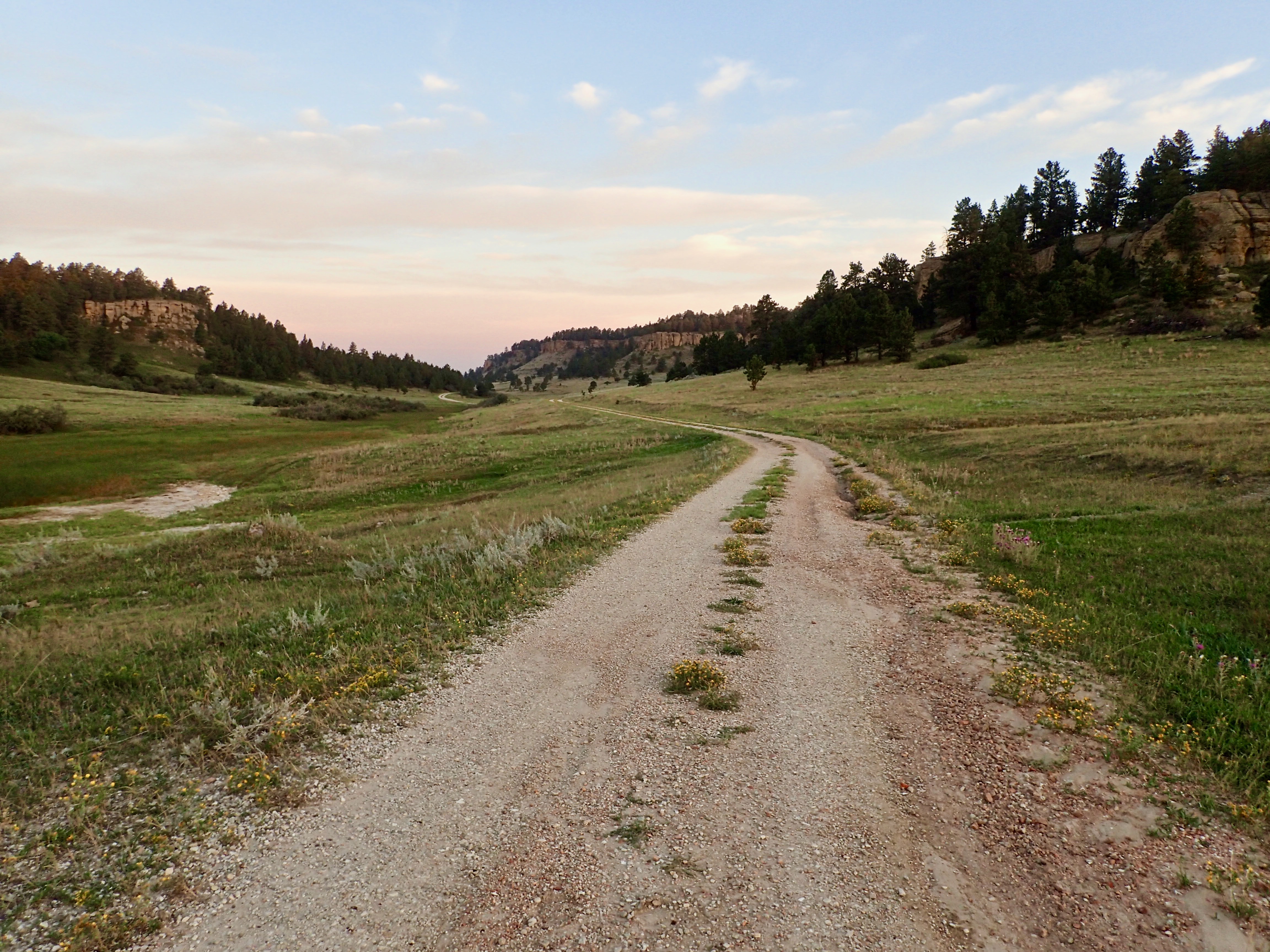
The Green Mountain Tail is about to turn steeper and looser. No problem.
Here are the specifications of my Alchemy Ronin Titanium gravel bike.
Social media image by Alchemy Bikes building a custom titanium frame.
ronin (roe' nin), noun,lit "wave man," a lordless Samurai in feudal Japan, also drifter or wanderer
Custom fit. Custom geometry. Custom tube shaping. Custom Cerakote. Custom build. Hand crafted in Colorado. Developed over decades of riding and brought to life by custom frame builder Ryan Cannizzaro. Shimano GRX Di2 drivetrain, Industry Nine UL 250 Trail Carbon wheels, and carbon bits.
Alchemy Ronin Titanium. The wait is nearly over. Time to wander a bit more.
Social media image by Alchemy Bikes of a Ronin Titanium at Red Rocks, Colorado.
The Waiting, Tom Petty & The Heartbreakers, featuring Eddie Vedder (2006)
Single speed mountain biking caught on in certain circles awhile back, but largely dissipated over time. Not for me. My primary mountain bike from 2001-2018 was a rigid steel single speed. Although I added a geared Jones 29+ mountain bike for bikepacking in 2018, my two other mountain bikes remain rigid single speed, even now.
Inexplicably, signs stir of a single speed resurgence, at least here in the Black Hills of South Dakota. See, e.g., Single Speed Shindig. Sweet. I love the single speed mindset and resulting lifestyle.
Tooling around the house on my new Rock Hopper Comp (December 1991)
In late December 1991, yes that's over 30 years ago, I stepped into our suburban Denver home after yet another long work day. I'm done. But Colleen has other thoughts. She presents a shiny new mountain bike as a congratulatory gift for my making partner at my law firm.
It's a Specialized Rock Hopper Comp, a solid mid-level mountain bike at the time. Rigid steel frame. 26 inch wheels. 2 inch wide knobby tires. Cantilever rim brakes. 3x8 speed drivetrain. 24/36/46 chain rings x 13/28 cassette. Trigger shifters. Flat bars. Flat pedals with toe clips. Braze-ons for racks and fenders. Too cool for school.
A few months before, I had rented that very bike from a local bike shop. For my first ever mountain bike ride, a friend suggested 24 miles of single track Colorado Trail from Kenosha Pass to Georgia Pass and back. Wow. That bike was fast, fun, and so capable off-pavement. At every opportunity, I rode anything that looked like a road or trail or goat path. I was hooked.
In the late 1990's, I started racing mountain bikes and soon found myself in a nuclear arms race. That is, with dizzying advances in suspension, gearing, brakes, and seemingly everything else on a bike, one could buy performance and relative placing in amateur racing. For a few years, I plunged into the fray, buying a racing mountain bike and continuously upgrading components, which relegated the stodgy, heavy, hopelessly out of date Rock Hopper to back up/loaner bike.
Then, in 2001, for some reason I converted the Rock Hopper to single speed for an occasional commute to work. On the very first ride, I experienced an epiphany. This is it. This is the way. Strip it all down. Simplify it all. Everything. It's about the ride, not the bike. Ride. Just ride.
I bailed out of the rat race, ditching all the latest, greatest, gee-whiz technology. Just like that, I chose to ride a rigid single speed as my primary mountain bike for everything, including several years at the 24 Hours of Moab, the Dakota Five-O, and similar mountain bike races. It was hard. It was awesome. It was perfect for me.
My Rock Hopper dressed for a final commute to work on June 30, 2020, with some original turquoise paint peeking through on the top tube. The "IRONCLAD" decal represents the old mountain bike racing team of ChristianCycling.org.
Over time, I converted an odd assortment of beater bikes to single speed or fixed, even fashioning an old mountain bike into a banana seat, ape hanger cruiser. My few remaining geared bikes languished, practically unridden. In 2010, I decided to try a drop bar mountain bike, so I built up a new, rigid, drop bar, Kona Unit 29er single speed as my primary mountain bike. The Rock Hopper moved back to commuter, where it's been ever since.
Sometimes set up single speed and sometimes fixed, the Rock Hopper carried me many of the final years that I commuted to work in Rapid City. My retirement in 2020 closed that chapter, but the Rock Hopper still brings a smile to face when spinning to CoffeeOutside - Rapid City and other low key rides.
Single speed sweetness at the 2019 Black Hills Gravel Series Sugar Shack ride.
In 2014, I built up a Black Mountain Cycles MonsterCross frame into a bike for riding all kinds of roads in all kinds of conditions. An All Road Bike (2015) and A Road Bike By Black Mountain Cycles (2018). A key feature leading me to that particular frame was its old school semi-horizontal dropouts, which allow easy conversion from gears to single speed, even in the field. Make It Single Speed.
Over the past 8 years, I have ridden my Black Mountain over 30,000 miles, mostly on gravel and dirt roads. I love to ride that bike, confident that it will take me through anything. See, e.g., Odin's Revenge 2012-2016 and Stretching The Notion Of Rideable. It is the most comfortable road bike I have ever ridden and really shines set up single speed, which I regularly do, just because. Single Speed, It Is.
My 2014 Black Mountain MonsterCross bike, fresh off its 12,000 mile overhaul in 2016.
It all worked well enough, but eventually I realized that did not very often take the time to switch between geared and single speed. Then, a few years ago, Salsa announced the arrival of the Storm Chaser, a single speed gravel bike designed from the ground up for long rides in bad conditions on rough roads. Uffda. I almost bought it to allow the Black Mountain to be a dedicated geared gravel bike. The N+1 Struggle Is Real.
But I did not buy that Storm Chaser. Ultimately, I concluded that I really didn't want it, mainly because my Black Mountain is such a sweet single speed. So, I committed to continue to switch back and forth.
Now, I decided to simply dedicate my Black Mountain to full time single speed. That's where it really shines. And I can cruise into single speed bliss on a moment's whim.
A new geared bike is in the works, but it's not N+1. It's more like e to the nth.
"This is the way," proclaims Lucas Haan at the 2019 Sturgis Black Hills Gravel Series ride.
Great news for grass roots gravel! Gravel Maestro Lucas Haan recently announced the sixth season of the wildly popular Black Hills Gravel Series. 2022 Black Hills Gravel Announcement. As always, there's something for everyone.
For 2022, the Black Hills Gravel Series will NOT have mass starts on designated dates. Rather, Lucas will create a set of routes for each month from April through October and make them publicly available as a "Ride Of The Month" challenge. At your convenience, you can ride and post the monthly ride of your choice.
Dane Church on the the April ROTM of the 2022 Black Hills Gravel Series.
As in the past, he plans to offer three routes, increasing in length and difficulty, for each start location. They're named by color: Green(10-20 miles, moderate elevation gain), Blue(20-40 miles, moderately more elevation gain and difficulty), and Black (50+ miles, significantly more elevation gain and difficulty, likely with an added challenge). A route exists for every level of ability, experience, and ambition.
Lucas also created a community treasure by archiving prior routes on the "Routes & Resources" page of the Black Hills Gravel website. It's a great resource of unique, fun routes on gravel and dirt roads all over the Black Hills and surrounding prairie that you can ride most any time.
Enjoy these rides. Bring your family. Invite your friends. Support the Black Hills Gravel website.
And especially thank Lucas for his tireless work to continue to make it all happen.
How could you lead me on, and not let me stay around
After The Love Has Gone, David Foster, Jay Graydon & Bill Champlin (1979)
So many roads to explore in the Black Hills, and beyond. This is Fuller Pass Road in Custer Gallatin National Forest, near the North Dakota border.
From the very day I finished my 2021 ride of the Great Divide Mountain Bike Route, I started fielding questions of what's next. Months later, I still do. Now, it's a valid question and I appreciate the interest. But, man. I don't know. I just don't know.
The time after achieving a big goal is always challenging, but the Great Divide is at a whole nother level. This developed over so many years of blue sky dreaming, so many months of detailed planning, and so many weeks of challenging riding. I don't know that I'll ever launch an adventure this big again. I just don't know. I certainly do not have one in mind right now.
On the other hand, I'm not done, either riding or writing. I have a laundry list of weekend and weeklong bikepacking routes rattling around inside my head that I'd love to create and ride, as well as a number of local and distant areas to research, map out, and explore. Also, there still are a good number of nifty rides and events, especially in Iowa and Minnesota, that I have yet to ride. I plan to ride more than a few miles in 2022.
Working through this post-Great Divide process, I remember writing a post back in October of 2018 about my journey after achieving a multi-year goal of riding my Black Hills BackBone cross-state gravel route. On a far smaller emotional scale, that post still rings true today. Here it is.
The "A" race. The premier event. The epic destination.
For endurance athletes, the end of the calendar year triggers dreams of the big goal for next year. What could it be? Is it even possible? How? To make it so, what must be? What must not be? The questions and analyses percolate for hours, days, weeks, even months. And that's just identifying it. Then the real work begins. Gotta plan. Gotta organize. Gotta train. Gotta turn everything around to focus on the big goal.
I've spent most of my adult life with such a mindset, resulting in many memorable races, events, and destinations over the years. And many things outside of athletics. There's much to be said for setting a big goal and working to achieve it. I'm a big fan of big goals.
The big goal dominates all thought, like Pikes Peak looming over the Colorado landscape. Back in 1989, my big goal was running the Pikes Peak Marathon.
Undue emphasis on results, however, inevitably leads to a letdown afterward. That is, after achieving the big goal, what then? Typically, I respond by identifying the next big goal and fixing it on the horizon. Start the process over again. Then again. And again. The process becomes a lifestyle, all dependent on setting and achieving the next big goal.
It's all good. Until there is no next big goal. Or identifying the next big goal is elusive. What then?
In July of 2017, I finally completed a bicycle ride covering the 310 miles of the Black Hills BackBone, a North-to-South remote road crossing of the State of South Dakota. Admittedly, the ride was different from that originally conceived, but I celebrated achieving a major, multi-year goal. Three Days of BackBone.
Then, I drifted.
Months passed. Fitness plunged. Weight soared. In October of 2017, the changing season eventually triggered a nagging feeling that I needed a big goal to kick start stuff. But identifying it was more than elusive. For some reason, I could not even begin to consider one.
A simple journey with no big goal in sight.
To clear my mind one day, I went on a long bike ride. Somewhere along that remote dirt road, I recognized what has been a mainstay for the past 10+ years - my daily bike commute. Every day I ride to work, unless a family commitment prevents it. It's what I do, regardless of weather, mood, physical ailments, or anything else. It's just part of my day. There is no big goal.
Well, maybe it's that simple. Maybe I don't need the next big goal, after all. Maybe I should just add something small to my daily routine. Make it part of my day. Like my bike commute.
But what? What's missing? Running. I don't run anymore, since all but abandoning it over 15 years ago. Thousands of hours spinning circles over the years must have physically changed something. Running now is awkward and uncomfortable, rather than natural and smooth. This will be difficult to start, let alone maintain, especially without a big goal.
Then, one morning, I just started. It was short (less than a mile), slow (barely above walking speed), and painful (ice and ibuprofen afterward). Too sore to run the next day, I ran again the day after that. To allow some recovery, I decided to run just three mornings a week, making my third run on my favorite M-Hill trails. Time passed, but progress was almost imperceptible. I repeatedly reminded myself that speed and distance mattered not. Just keep at it.
Now, over a year later, I am still running three early mornings a week. Speed, distance, and difficulty have increased some, but not a lot. Maybe that's the next step, or maybe not. I just love getting back out there running. A part of me awoke from a long slumber.
I didn't set or achieve the next big goal in 2018. It's much bigger than that.
After The Love Has Gone, Earth, Wind & Fire (live 1981)
After The Love Has Gone, Leonid & Friends (EW&F cover) (2021)
Over the past seven months, I've written 30 posts about my 2021 ride of the Great Divide Mountain Bike Route, in addition to 12 earlier posts about my preparations. Most include a reference to a song that helped me understand and express a particular experience. Relevant lyrics from such a song appear at the top of each post and a link to a complete video clip at the bottom. The song then becomes part of the story.
That's a lot of material over a long time. So, I decided to put all that together in a single post. Below are the lyrics quote and video clip of the song from each Great Divide post that had one. Now, I can go to one place to listen to all the music telling the story of my Great Divide ride. The title above the lyrics is a link to the corresponding post, in case the music triggers a desire to read the narrative.
Elwood: It's 106 miles to Chicago, we've got a full tank of gas, half a pack of cigarettes, it's dark, and we're wearing sunglasses.
Jake: Hit it.
Elwood Blues and Joliet Jake Blues, The Blues Brothers (1980)
Peter Gunn Theme, The Blues Brothers Original Soundtrack (1980).
For the full effect, here's the scene from the Blues Brother's movie, with the Peter Gunn theme song, Carrie Fisher as the Mystery Woman, and the "Hit It" quote.
The Blues Brothers, featuring Carrie Fisher as The Mystery Woman (1980).